The 4 Armies Method
The 4 Armies Method is a human development framework built on 25 years of practitioner work and grounded in cognitive-behavioral theory, Identity Process Theory, and schema therapy. It maps the journey of personal transformation across four positions and installs a set of named, behavioral protocols for navigating each.

Four positions on one landscape
Not a personality type. A position on a journey. You can move.
The method uses the metaphor of the Four Armies to help you recognize where you are in life and how to evolve beyond limiting patterns. The framework was first written down in The Human Experience: The Four Armies of Earth, and the training platform walks it lesson by lesson.
The Four Armies
The Fourth Army: The Muckers
Where every journey begins. Operating from inherited constructs: the rules about love, conflict, and what you deserve that were handed over before you could question them. It feels like personality. It is programming.
The Third Army: The Gatherers
Questioning. Collecting. Not yet building. Awareness is present and new ways of seeing are being gathered. The Gatherer has looked up and seen the bridge.
The Second Army: The Builders & Catchers
Laying new planks on purpose, making a different choice in the moment the old pattern would have run. The Catcher turns back to reach for the person still in the Muck.
The First Army: The Divine
Present and purposeful. The past inspires, influences, and informs, but does not define. Not an arrival: a practice returned to daily.
The Protocol Library
By the end of the 12-session program, participants have a permanent toolkit of named behavioral agreements they can identify, recall, and deploy by name.
| Protocol | Trigger condition |
|---|---|
| 01 Seven Tails | External feedback conflicts with your self-concept |
| 02 Cocoon | The Seven Tails threshold is met |
| 03 Hand to Mouth | Fight-or-flight arrives during conflict |
| 04 Sharing vs. Discussing | Before any significant conversation |
| 05 Pause | Conflict escalating beyond Hand to Mouth |
| 06 24-Hour Debrief | After any conflict, within 24 hours |
| 07 Direct Request | A need is going unspoken |
| 08 Appreciation | Daily: one specific observed behavior |
| 09 Conversation Architecture | Opening a hard conversation |
| 10 Listening as a Discipline | Someone is telling you something that matters |
One protocol is published so far: the Seven Tails Protocol, the rule for when to finally believe what people are telling you about yourself.
The research foundation
Written for a general reader. The first four are the sources the Seven Tails Protocol cites in full; the last two are named in the framework's foundations, and their connection to specific protocols is RK's to describe.
- Beck (1976), Cognitive Therapy and the Emotional Disorders
- The origin of cognitive therapy: the idea that patterns of thought shape mood and behavior, and that those patterns can be examined and changed.
- Young, Klosko and Weishaar (2003), Schema Therapy
- The account of early maladaptive schemas, the frameworks formed in childhood that filter everything that comes later through an existing belief.
- Breakwell (1986), Coping with Threatened Identities
- Identity Process Theory: why a threat to how we see ourselves produces resistance, and why that resistance grows with how central the threatened pattern is.
- Neff (2011), Self-Compassion
- Known for the research on treating yourself with the care you would offer a friend, and for the evidence that this supports change better than self-criticism does.
- Frankl (1985), Man's Search for Meaning
- Known for logotherapy and the argument that meaning can be chosen even in the worst circumstances.
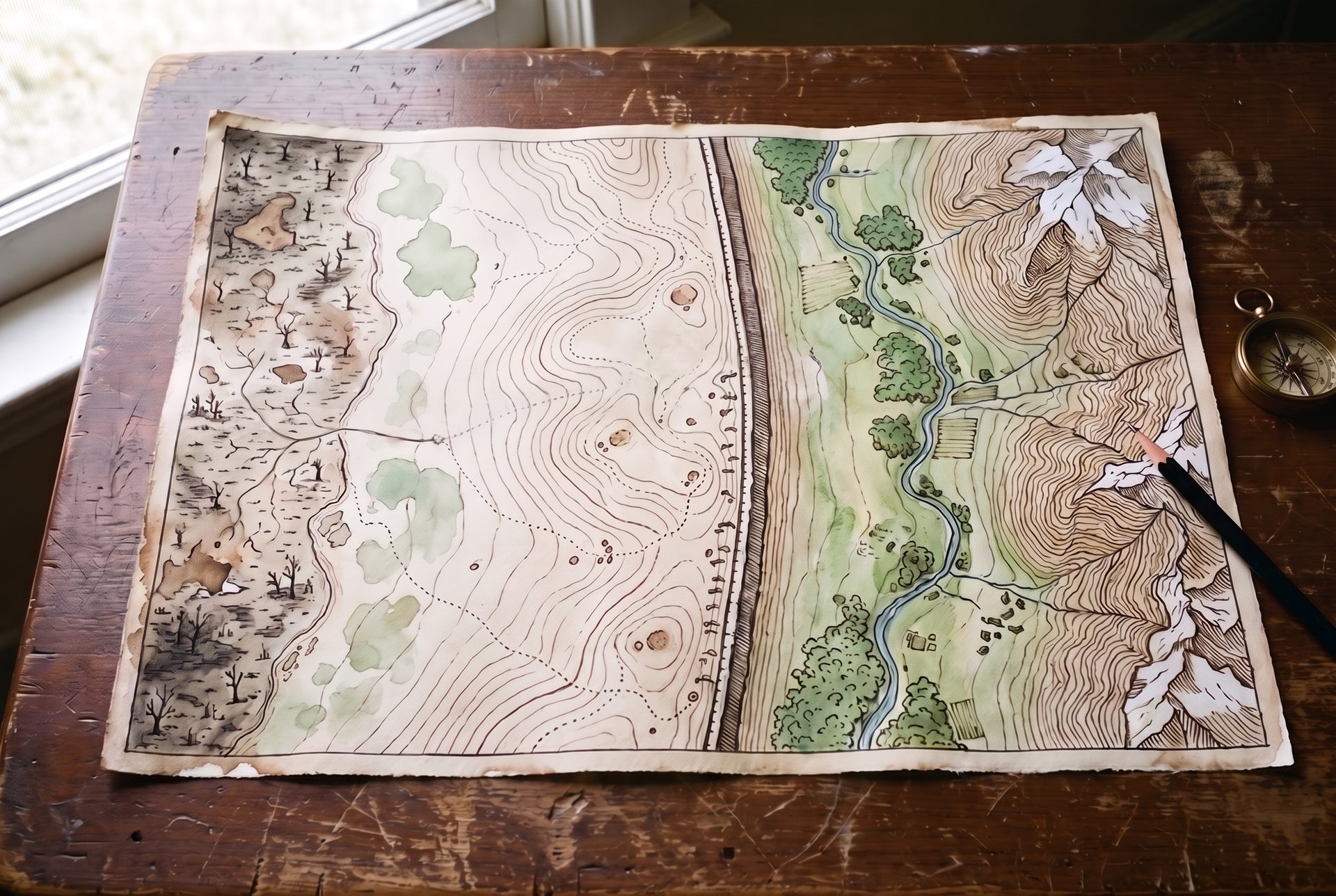
The Muck Map
A composite measurement tool across five subscales: Army Position, Movement, Relational Health, Purpose Clarity, and Pattern Awareness.
Administered at intake, mid-program, and close. The difference between your intake score and your close score is the documented impact of the work.
Start with one honest question.
Find out which Army is running your day, then decide what to do about it.